
Recovering Abandoned Kajabi Checkouts With ActiveCampaign and Behavioral Lifecycle Automation

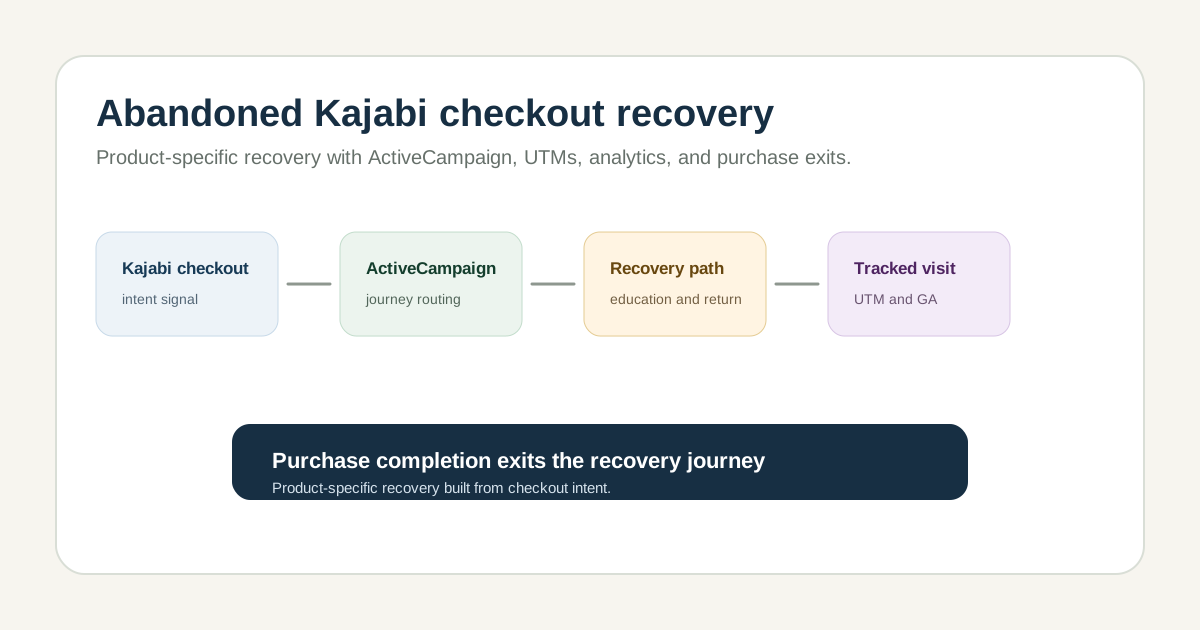
Table of contents
Executive summary
Med School Headquarters sold education products and services through Kajabi, with ActiveCampaign powering lifecycle communication.
The abandoned-checkout problem was straightforward: some prospective students showed clear buying intent by entering a Kajabi checkout, then left before completing the purchase.
I built a recovery system that used checkout behavior, product-specific routing, ActiveCampaign nurture, tracked UTMs, Google Analytics, and purchase suppression to recover that demand.
This was not a generic reminder sequence. The system treated checkout initiation as a high-intent behavioral signal and routed follow-up around the specific product or service the student considered.
Business and technology context
Med School Headquarters served students preparing for medical school.
The stack included:
- Kajabi for products and checkout.
- ActiveCampaign for contact management and lifecycle automation.
- Google Analytics for web and conversion visibility.
- UTM parameters for tracing email traffic and purchases.
There was no sales rep manually following up with every checkout abandoner.
Lifecycle automation had to do the recovery work: identify intent, educate the student, route them back to the right offer, and stop once the purchase happened.
The abandoned-checkout gap
Checkout behavior is one of the strongest signals in a small education business.
An email open tells you almost nothing. A page view tells you a little more. A checkout start tells you the person seriously considered buying.
Before the rebuild, those users could leave without structured product-relevant follow-up.
That left too much intent on the table.
The recovery system needed to know:
- Which product or service the person considered.
- Whether they entered checkout.
- Whether the purchase was completed.
- Which recovery journey should start.
- When messaging should stop.
- Which tracked links contributed to later purchase behavior.
Behavioral trigger design
The recovery journey started with Kajabi behavior.
User views product
  |
  v
User begins Kajabi checkout
  |
  v
Checkout is not completed
  |
  v
ActiveCampaign receives intent signal
  |
  v
Enroll in product-specific recovery
The exact transfer layer depended on the available Kajabi and ActiveCampaign setup. This case study does not assume a specific webhook, API, Zapier step, or native integration beyond the confirmed stack.
The important part was the event model:
checkout_started
  product = product or service being considered
  contact = known email/contact when available
  purchase_status = not completed
That event gave ActiveCampaign enough context to start relevant follow-up.
ActiveCampaign journey architecture
ActiveCampaign handled the routing and nurture logic.
Checkout intent signal
  |
  v
Identify product or service
  |
  v
Apply product-specific tag
  |
  v
Enroll in matching recovery journey
  |
  v
Send education and objection handling
  |
  v
Track click with UTM parameters
  |
  v
Exit if purchase completes
The core architecture was product-specific.
A student abandoning an essay review checkout should not receive the same messaging as someone considering interview preparation. The stage, hesitation, and perceived value are different.
The recovery path had to match the product.
Product-specific recovery strategy
The sequence was designed around relevance.
The goal was not to keep saying "finish your checkout." That gets old fast.
The better recovery system did a few things:
- Reinforced the value of the specific product or service.
- Added educational context around the decision.
- Addressed likely hesitation in a general, non-fabricated way.
- Helped the student understand what the purchase could help them do.
- Sent them back to the appropriate Kajabi page.
The logic looked like this:
if checkout_product == application_support:
  enter application support recovery

if checkout_product == essay_review:
  enter essay review recovery

if checkout_product == interview_prep:
  enter interview prep recovery

if checkout_product == education_product:
  enter product-specific recovery
This is where lifecycle automation becomes useful for a small business. The system can respond to what the customer actually did without needing a human to inspect every abandoned checkout.
Purchase suppression
Purchase suppression was required.
The worst version of abandoned-checkout automation keeps sending recovery emails after the person buys.
The suppression logic looked like this:
Recovery journey active
  |
  v
Purchase detected?
  |
  +-- yes:
  |     remove from recovery
  |     update customer status
  |     stop product-specific reminders
  |
  +-- no:
        continue recovery path
That protected the customer experience.
It also protected measurement. If a person completed a purchase, the system needed to update their state so the next communication matched reality.
Attribution and reporting
The measurement layer used UTM parameters and Google Analytics.
Each recovery email used tracked links. That let Google Analytics show traffic and downstream behavior connected to the recovery campaign.
The attribution flow looked like this:
Recovery email sent
  |
  v
User clicks tracked Kajabi link
  |
  v
UTM parameters captured in analytics
  |
  v
User returns to product or checkout page
  |
  v
Purchase data reviewed
  |
  v
Campaign path evaluated
This gives a traceable path. It does not automatically prove incrementality.
The distinction matters:
- Email-attributed revenue means a tracked email touchpoint was connected to purchase behavior.
- Assisted conversion means the email was part of the path.
- Last-click attribution means the tracked email click was the final measured click.
- Incremental revenue means the sale would not have happened without the email.
UTMs and Google Analytics can show tracked behavior. A controlled holdout is needed to prove causality cleanly.
QA and duplicate-message prevention
Abandoned-checkout journeys need tight QA because they sit close to revenue.
The important checks were:
- Does the checkout event apply the correct product context?
- Does the contact enter only the relevant journey?
- Does the purchase event remove the contact?
- Are UTMs present and consistent?
- Does the return link point to the right Kajabi page?
- Can the same user trigger duplicate recovery messages?
- Are existing customers suppressed where appropriate?
That QA work is part of the architecture.
Small businesses often think lifecycle automation is only the workflow builder. The real system includes tags, triggers, purchase-state updates, analytics, and suppression.
Limitations
The system depended on the data available from Kajabi, ActiveCampaign, Google Analytics, and purchase records.
That creates limits.
If the checkout signal is incomplete, some abandoners may not enter recovery. If a user switches devices or clears tracking context, attribution can be harder to read. If purchase data updates late, suppression can lag.
Those limits do not make the system useless. They just define how honestly the results should be interpreted.
Lessons learned
Checkout initiation is a stronger signal than passive engagement.
Product-specific recovery is stronger than generic reminders. The product tells you what the customer cared about. The follow-up should respect that.
Education can do more than urgency. For students making a considered purchase, useful context can be more persuasive than another "complete your order" reminder.
Purchase suppression is mandatory. The moment someone buys, the journey should change.
Attribution language needs discipline. UTMs and Google Analytics can show a tracked path, but they do not prove pure causality by themselves.
The larger lesson is that small businesses can build meaningful lifecycle systems with the stack they already have. You do not need perfect infrastructure to start responding to customer behavior.
Get one retention idea, every other week
The Lifecycle Letter. One actionable retention idea in your inbox, no fluff, unsubscribe anytime.