
Recovering Abandoned Affiliate Trial Signups With Lifecycle Automation

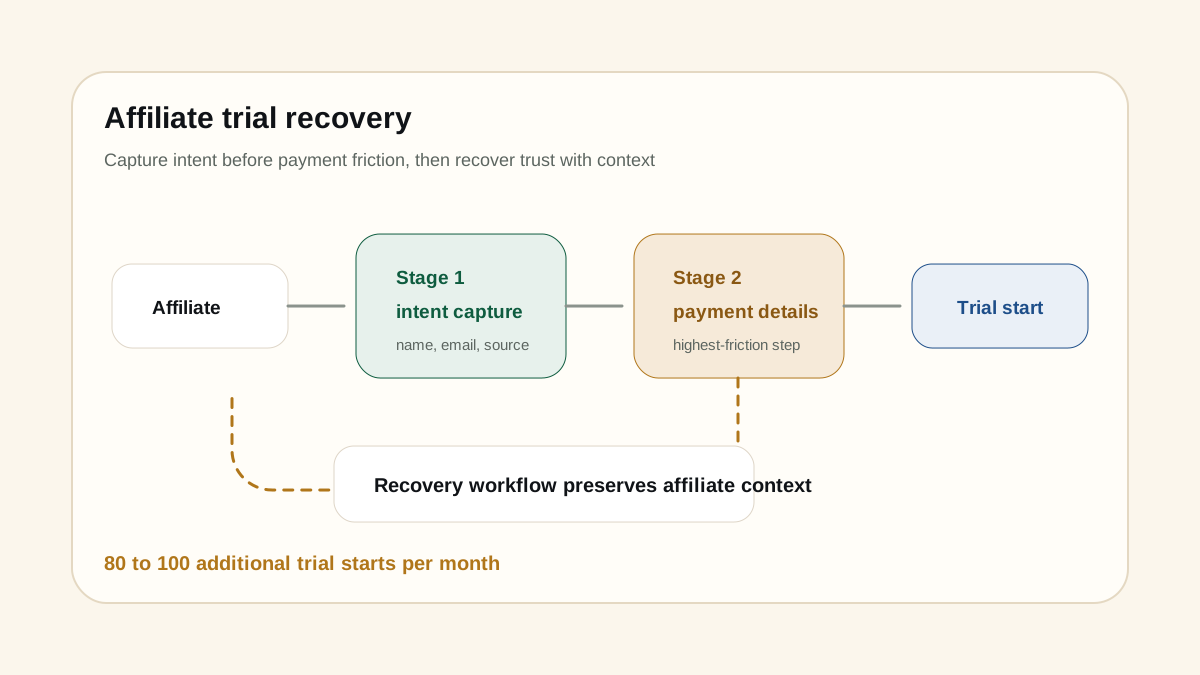
Table of contents
Introduction
Affiliate traffic can create a strange lifecycle problem.
The user arrives with interest that was created somewhere else: an influencer video, a partner offer, a promise, a story, or a training. By the time they reach the product signup page, trust has already been borrowed from that source.
At Zendrop, affiliate traffic converted well into landing-page visits, but only around 29% completed the free-trial signup. Many users abandoned when they reached the payment-information step.
This case study explains how I redesigned the affiliate signup experience to capture intent earlier, preserve attribution, and recover abandoned trial signups through lifecycle automation.
The measured outcome was approximately 80 to 100 additional trial starts per month.
Business Problem
Zendrop's affiliate audience included many beginners. They were interested in building an ecommerce business, but they were also skeptical. Many had seen online business opportunities before. Some did not fully understand the product yet. Some were uncertain about giving payment information before they felt enough trust.
The original signup flow asked for too much commitment before capturing enough recoverable intent.
When a user abandoned at the payment step, the system did not always have what it needed to follow up properly:
- Who the user was.
- Which affiliate brought them in.
- What promise or context led them to click.
- Whether they had consented to marketing.
- How to restart the signup path without losing attribution.
That turned high-intent traffic into a one-shot conversion event.
Why Native Platform Features Weren't Enough
A standard abandoned-cart flow was not the right mental model.
This was not someone leaving a product in a cart after browsing a catalog. This was a prospective entrepreneur hitting a trust and commitment barrier during a trial signup.
The recovery system needed to do more than say "finish checkout."
It needed to:
- Preserve the affiliate source.
- Reference the influencer or partner when appropriate.
- Rebuild trust with education and proof.
- Handle objections around payment information.
- Show testimonials and case studies.
- Bring the user back to the correct offer.
- Keep attribution intact if they returned later.
That required redesigning the signup capture model, not just adding emails after abandonment.
Solution Architecture
The signup flow was split into two stages.
Stage one captured intent before payment friction:
- First name
- Marketing consent
- Affiliate source
Stage two asked for payment information and trial completion.
Affiliate landing page
  |
  v
Stage 1: intent capture
  - first name
  - email
  - consent
  - affiliate source
  |
  v
Stage 2: payment details
  |
  +-- completed -> trial started
  |
  +-- abandoned -> recovery workflow
This changed the system from "all or nothing" to "capture intent, then recover if trust breaks."
Technical Implementation
The first stage created or updated the user record before payment details were requested.
on stage_one_submit:
  create_or_update_contact(email)
  set first_name
  set marketing_consent
  set affiliate_source
  set signup_stage = "payment_pending"
  set signup_started_at = now
If the user completed payment, the contact moved out of recovery.
on trial_started:
  set signup_stage = "trial_started"
  set trial_started_at = now
  exit affiliate recovery
If the user did not complete the second stage, the lifecycle platform entered them into a recovery workflow.
wait recovery_window

if signup_stage == "payment_pending"
and marketing_consent == true:
  enter affiliate_trial_recovery
The affiliate source stayed attached to the contact, so the follow-up could preserve the original context.
if affiliate_source == "partner_a":
  render partner_a reminder block
else if affiliate_source == "partner_b":
  render partner_b reminder block
else:
  render default Zendrop education block
The goal was not to overpersonalize for novelty. It was to avoid breaking the trust path that got the user there.
Recovery Sequence Design
The recovery journey used several message types.
- Reminder: return to the signup path.
- Education: explain how Zendrop helps a beginner move forward.
- Objection handling: address payment hesitation and uncertainty.
- Proof: use testimonials and case studies.
- Credibility: connect the affiliate promise back to Zendrop's product value.
- Final prompt: give a clear path to start the trial.
This sequence was different from a normal abandoned-signup message because the user needed confidence, not just a link.
The messaging had to acknowledge the real friction. A beginner considering a dropshipping platform may worry about whether the business model is real, whether they can execute, whether the platform is worth paying for, and whether the person who referred them oversold the opportunity.
The recovery system gave lifecycle a chance to answer those concerns after the initial signup attempt.
Attribution Handling
Affiliate attribution had to survive the recovery path.
The system preserved source data at the moment of first intent capture. That meant a recovered trial could still be connected back to the original influencer or partner.
first_touch_affiliate_source = captured_source
latest_affiliate_source = captured_source
trial_recovered_from_affiliate_flow = true
Without that, the recovery program would create reporting problems. The business might see additional trials but lose sight of which partner created the original demand.
Engineering Decisions and Tradeoffs
The biggest decision was splitting the signup flow.
That added one more step to the experience, but it reduced the cost of payment-step abandonment. If a user left during the second step, Zendrop still had consented contact information and source context.
The second decision was to make affiliate context part of lifecycle logic. That increased data dependency, but it made the follow-up more coherent. Users did not arrive from a neutral source. They arrived through a relationship.
The third decision was to treat the sequence as trust recovery instead of checkout recovery. That changed the content from pressure to education, proof, and objection handling.
Measured Results
The recovery automation generated approximately 80 to 100 additional trial starts per month.
That number mattered because it came from traffic Zendrop had already earned through affiliates. The system improved the value of existing acquisition rather than requiring more spend or more partner volume.
Lessons Learned
Affiliate signup recovery works best when it preserves context.
If a user clicks from an influencer, lands on a product page, abandons at payment, and then receives a generic brand email, the system loses the thread. The recovery path should remind the user why they clicked and give them enough confidence to finish.
The technical lesson is simple:
Capture intent before the highest-friction step.
Attach source context immediately.
Use lifecycle automation to recover trust, not just the form.
Closing Thoughts
Zendrop's affiliate recovery system worked because it treated abandonment as information.
The user had enough intent to start, but not enough confidence to finish. By capturing the first signal earlier and building a follow-up path around attribution, education, proof, and objection handling, the lifecycle system recovered trials that the original flow would have lost.
Get one retention idea, every other week
The Lifecycle Letter. One actionable retention idea in your inbox, no fluff, unsubscribe anytime.