Building a Research-Led Education Engine Before Black Friday

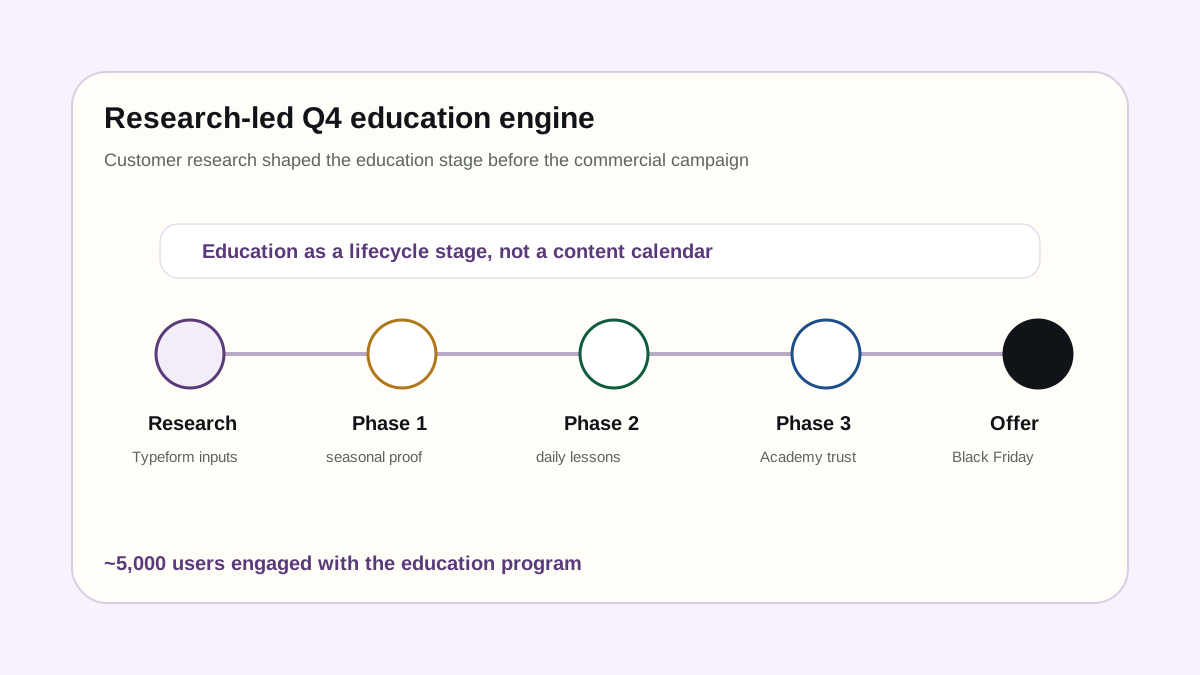
Table of contents
- Introduction
- Business Problem
- Why Native Campaign Thinking Wasn't Enough
- Research Foundation
- Solution Architecture
- Phase 1: Seasonal Anticipation
- Phase 2: Masterclass Launch and Daily Lessons
- Phase 3: Academy and Coach Exposure
- Engineering Decisions and Tradeoffs
- Measurement Limits
- Lessons Learned
- Closing Thoughts
Introduction
Black Friday campaigns usually fail before the offer goes live.
The issue is not always the discount. It is that the audience reaches the promotion without enough belief, product understanding, or seasonal preparation.
Zendrop wanted users ready for the biggest ecommerce season of the year before the commercial push started. That meant the lifecycle program needed to educate users ahead of time, not wait until Black Friday week to begin selling.
This case study explains how I used customer research to build a multi-phase education engine before Black Friday. The campaign used Typeform surveys, customer pain points, prior-year Q4 proof, coaching content, Academy exposure, and daily lessons to prepare users for the later promotion.
Approximately 5,000 users engaged with the educational program. The following Black Friday campaign generated roughly $200K compared with approximately $50K the previous year.
That does not mean the education campaign caused the entire revenue increase. The offer, segmentation, urgency, list growth, in-app placement, and market context also mattered. Today, I would build participant cohorts and holdout groups to measure incremental impact more cleanly.
Business Problem
Zendrop's users needed more than a Black Friday discount.
Many were beginners trying to understand:
- Which products to sell.
- How to prepare a store.
- How to think about paid ads.
- How to handle customer experience during Q4.
- Why seasonal timing mattered.
- How Zendrop Academy and coaching could help.
If the company waited until Black Friday to start the conversation, the offer would have to do too much work. It would need to educate, build trust, create urgency, answer objections, and convert in a short window.
The better lifecycle move was to create a pre-promotion education stage.
Why Native Campaign Thinking Wasn't Enough
A standard promotional calendar would have focused on launch date, discount, reminders, countdowns, and deadline emails.
That was not wrong, but it was incomplete.
The audience needed a reason to believe the offer mattered before they saw it. They needed to understand what Q4 could mean for an ecommerce seller and what preparation looked like.
The lifecycle question was:
What does the customer need to understand before a Black Friday offer becomes relevant?That changed the campaign from a discount push into a staged education system.
Research Foundation
The campaign began with customer research.
Typeform surveys helped identify what users were worried about and what they wanted to learn before Q4.
The research informed the curriculum. Instead of guessing which lessons would matter, the campaign used customer feedback to shape the education sequence.
Research inputs included:
- Customer pain points.
- Beginner confusion.
- Seasonal concerns.
- Product-selection questions.
- Store setup questions.
- Advertising questions.
- Customer-experience questions.
- Interest in coaching and Academy resources.
The goal was to turn customer language into campaign architecture.
Solution Architecture
The education engine had three phases.
Research
  |
  v
Phase 1: seasonal anticipation
  |
  v
Phase 2: masterclass and daily education
  |
  v
Phase 3: Academy and coach trust-building
  |
  v
Black Friday commercial campaign
Each phase had a different job.
Phase 1 built seasonal belief. Phase 2 taught the operating model. Phase 3 introduced deeper support and made the future offer feel less abrupt.
Phase 1: Seasonal Anticipation
The first phase created context before the lessons began.
It used:
- Seasonal hype.
- Prior-year Q4 testimonials.
- Coach testimonials.
- Academy success stories.
- Anticipation-building emails.
The proof source mattered.
Generic testimonials can help, but prior-year Q4 testimonials were more contextually useful. They showed users that the season had created opportunity for people in a similar situation before.
The campaign was not saying "Zendrop is good" in the abstract. It was showing why preparation for this specific season mattered.
Phase 2: Masterclass Launch and Daily Lessons
The second phase launched the masterclass and delivered daily educational lessons.
Topics included:
- Product selection.
- Store setup.
- Advertising.
- Customer experience.
- Q4 preparation.
The structure worked like a curriculum rather than a loose set of promotional emails.
Day 1: why Q4 preparation matters
Day 2: product selection
Day 3: store setup
Day 4: advertising readiness
Day 5: customer experience
Day 6: operating checklist
Day 7: next step into Academy and coaching
The point was to help users build a mental model before asking them to buy into a larger offer.
Phase 3: Academy and Coach Exposure
The third phase introduced Zendrop Academy and exposed users to coaches.
This was important because the later commercial offer did not have to carry all the trust-building by itself. Users had already seen the education, the people behind the support, and the reason a structured program could help.
That made education a lifecycle stage, not just a content campaign.
The user moved from:
Aware of Q4 opportunity
  -> educated on preparation
  -> familiar with coaches and Academy
  -> ready to evaluate the Black Friday offer
Engineering Decisions and Tradeoffs
The biggest decision was using research to define the curriculum.
That made the campaign slower to plan, but it made the education more grounded. The alternative would have been building a content calendar from internal assumptions.
The second decision was to use contextual testimonials. Prior-year Q4 proof created a stronger bridge between the education and the seasonal campaign than generic success stories.
The third decision was to avoid treating engagement as the final metric. Around 5,000 users engaged with the education program, but engagement alone does not prove incremental revenue impact.
Measurement Limits
The following Black Friday campaign generated roughly $200K compared with approximately $50K the previous year.
That result should be reported carefully.
The education campaign likely helped prepare the audience, but the revenue increase cannot be attributed to the masterclass alone without cleaner measurement. The later campaign also included offer changes, segmentation, urgency, channel coordination, and other execution improvements.
Today, I would add:
- Participant cohorts.
- Non-participant comparison groups.
- Holdout groups where possible.
- Segment-level revenue tracking.
- Education engagement fields passed into later campaign reporting.
- Incrementality analysis after the commercial campaign.
That would let the team separate "people who engaged and later bought" from "people who bought because the education changed their likelihood to buy."
Lessons Learned
Education can be a lifecycle stage.
When the product requires belief, skill, and preparation, the system should not jump straight from awareness to offer. It should create the conditions that make the offer make sense.
For Zendrop, that meant using research to understand what users needed before Black Friday, then building a phased education experience that prepared them for the season.
Closing Thoughts
The strongest Black Friday campaign is not always the one with the loudest discount.
Zendrop needed a pre-promotion education layer that helped users understand the opportunity, the work required, and the support available. Customer research shaped the curriculum. Contextual testimonials created proof. Academy and coach exposure built trust before the offer arrived.
The result was a stronger lifecycle path into Black Friday, with clearer measurement opportunities for the next version.
Get one retention idea, every other week
The Lifecycle Letter. One actionable retention idea in your inbox, no fluff, unsubscribe anytime.