
Rebuilding a Webinar Funnel From Registration to Revenue

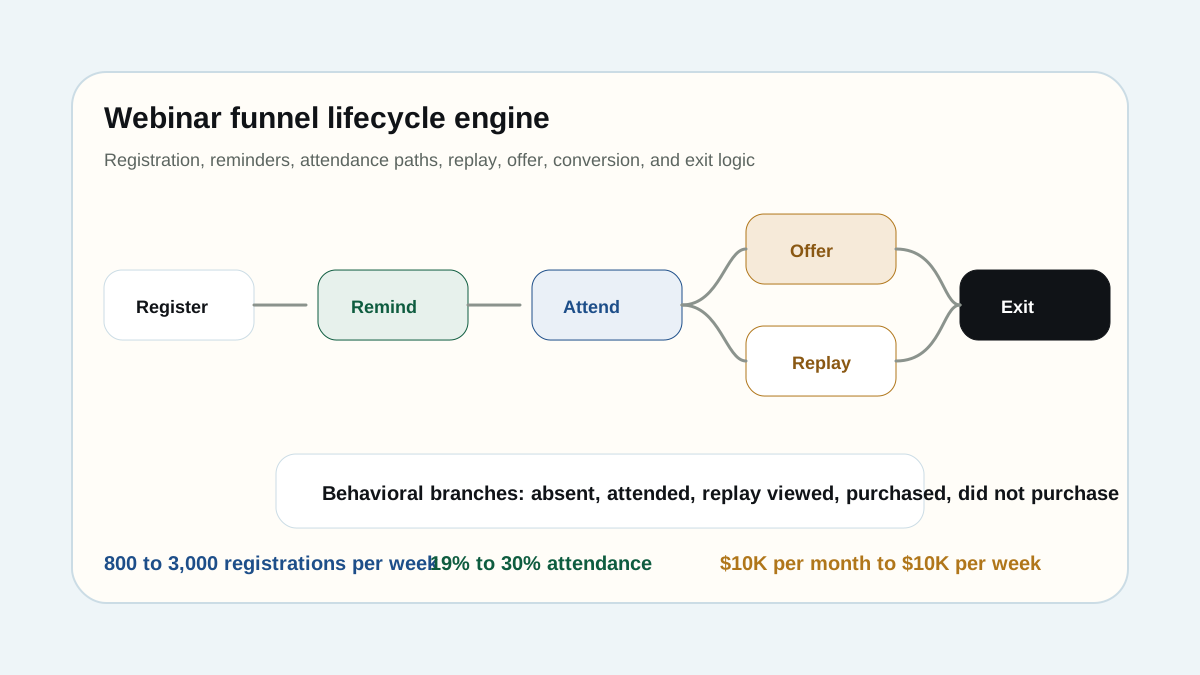
Table of contents
- Introduction
- Business Problem
- Why Native Webinar Features Weren't Enough
- Solution Architecture
- Registration Improvements
- Reminder and Attendance System
- Behavioral Branching
- Offer Sequence and Urgency
- Cross-Functional Work
- Measured Outcomes
- Measurement Improvements I Would Add Today
- Lessons Learned
- Closing Thoughts
Introduction
Webinar optimization is rarely just about reminder emails.
A webinar is a lifecycle journey with multiple states: registration, confirmation, calendar creation, reminders, attendance, absence, replay consumption, offer exposure, objection handling, purchase conversion, and exit logic.
At Zendrop, the weekly webinar was already an important education and revenue channel, but the system around it was underbuilt. The funnel needed to become an end-to-end lifecycle growth engine.
This case study explains how I rebuilt the webinar funnel across landing pages, one-click registration, reminder cadence, SMS reminders, join links, attendee segmentation, replay strategy, offer sequencing, urgency, purchase handling, and exit logic.
Business Problem
The original webinar system had clear signs of friction.
- Registration volume was limited.
- Reminder timing was basic.
- Attendance was low.
- The registration path added unnecessary effort.
- The offer was not always connected to the education.
- Attendees and non-attendees were not separated enough.
- Replay behavior was underused.
- Purchasers still needed clean exit logic.
The webinar was being treated too much like an event and not enough like a lifecycle path.
The better question was:
What state is this customer in before, during, and after the webinar?Why Native Webinar Features Weren't Enough
Webinar tools can register users, send reminders, and provide attendance data.
That was not enough for Zendrop's funnel because the customer journey crossed multiple systems:
- Landing pages.
- Forms.
- Email.
- SMS.
- Calendar links.
- Webinar attendance.
- Replay pages.
- Offer pages.
- Checkout and purchase events.
- CRM and lifecycle automation.
The growth opportunity sat between those systems. Native reminder features could not handle the full lifecycle logic by themselves.
The system needed to know:
- Who registered.
- Who added the event to a calendar.
- Who attended.
- Who missed it.
- Who viewed the replay.
- Who purchased.
- Who should exit.
- Who still needed objection handling.
Solution Architecture
The rebuilt funnel treated the webinar as a sequence of states.
Traffic source
  |
  v
Registration page
  |
  v
Registered
  |
  +-- confirmation
  +-- calendar prompt
  +-- pre-event education
  +-- email reminders
  +-- SMS reminders
  +-- direct join link
  |
  v
Live event
  |
  +-- attended -> attendee offer path
  +-- absent -> replay path
  |
  v
Offer window
  |
  +-- purchased -> exit
  +-- did not purchase -> objection and urgency
The goal was to reduce friction at every step and make follow-up reflect actual behavior.
Registration Improvements
The registration experience was rebuilt around clarity and lower friction.
Changes included:
- Clearer webinar positioning.
- Stronger landing-page messaging.
- More specific benefits.
- Case studies and testimonials.
- One-click registration where possible.
- Easier calendar additions.
- Better mobile experience.
- Fewer unnecessary steps.
The page needed to answer why the webinar mattered before asking users to register.
One-click registration was especially useful when the user already existed in the database. If the system already had the required identity fields, the CTA could register them without another full form.
if known_contact == true:
  one_click_register()
else:
  show_registration_form()
Reminder and Attendance System
The reminder system used email and SMS together.
The cadence included:
- Confirmation.
- Calendar-add prompt.
- Pre-event education.
- Day-before reminder.
- Same-day reminder.
- Near-start reminder.
- Direct join link.
- Urgency close to start time.
SMS was useful because the reminder could arrive close to the session with a direct join link.
registered_at = timestamp
webinar_start = timestamp

send confirmation immediately
send calendar prompt
send education before event
send email day before
send email day of
send sms near start
send join link when live window opens
The purpose was not to send more reminders for the sake of volume. The purpose was to remove the little points of friction that cause registered users to miss live events.
Behavioral Branching
After the event, the system split users by behavior.
if purchased == true:
  exit webinar offer journey
else if attended == true:
  enter attendee offer sequence
else if replay_viewed == true:
  enter replay viewer offer sequence
else:
  enter non-attendee replay sequence
Registered but absent users received the replay and a summary of what they missed.
Attendees received a recap, the offer, proof, deadline reminders, and a direct path back to the offer.
Replay viewers could receive follow-up based on the fact that they had consumed some of the training, even if they had not attended live.
Purchasers exited the conversion-focused messaging.
That last part matters. A webinar funnel without purchase exit logic creates a bad customer experience and messy reporting.
Offer Sequence and Urgency
The offer was repositioned as the logical next step after the training, not a disconnected pitch.
The sequence used:
- Offer explanation.
- Testimonials.
- Case studies.
- Bonuses.
- Order credits.
- Annual-plan positioning.
- Deadline reminders.
- Objection handling.
- Seven-day urgency.
offer_window = 7 days

for each user in offer_path:
  if purchased:
    exit
  else:
    send next message based on behavior and deadline
The urgency was tied to the offer window, but the messaging still needed to carry education and proof. Deadline emails alone rarely fix a weak offer path.
Cross-Functional Work
The funnel touched multiple teams and assets.
The work included coordination across:
- Marketing.
- Design.
- Product.
- Coaching.
- Webinar operations.
- Landing pages.
- Offer pages.
- SMS.
- CRM and lifecycle automation.
- Reporting.
That is why webinar optimization should be treated as lifecycle architecture. The revenue does not come from one reminder email. It comes from the full path holding together.
Measured Outcomes
The rebuilt webinar system increased:
- Weekly webinar registrations from approximately 800 to 3,000.
- Webinar attendance from approximately 19% to 30%.
- Webinar revenue from approximately $10K per month to $10K per week.
Those results came from improving the full funnel: registration, reminders, attendance, replay, offer sequencing, and behavioral follow-up.
Measurement Improvements I Would Add Today
The funnel produced measurable business improvement, but the next version would have stronger incrementality measurement.
I would add:
- Cohorts by registration source.
- Attendance-rate reporting by reminder exposure.
- Replay-viewer cohorts.
- Offer-page view to purchase reporting.
- Holdout groups where practical.
- Seven-day revenue by behavior path.
- Purchase exit audit logs.
That would help separate the impact of reminder timing, page changes, SMS, replay strategy, and offer sequencing.
Lessons Learned
A webinar funnel is a lifecycle system.
The important states are not only "registered" and "attended." They include absent, replay viewer, purchaser, non-purchaser, deadline exposed, and exited.
Each state needs different logic.
Closing Thoughts
Zendrop's webinar improved when the system stopped treating the event as a single broadcast moment.
The rebuilt funnel connected registration, reminders, SMS, attendance, replay, offer sequencing, urgency, and exit logic into one lifecycle path. That gave the webinar a better chance to turn education into revenue without losing customer context along the way.
Get one retention idea, every other week
The Lifecycle Letter. One actionable retention idea in your inbox, no fluff, unsubscribe anytime.